Grief, Obsolete?

Will feeling grief soon be obsolete?
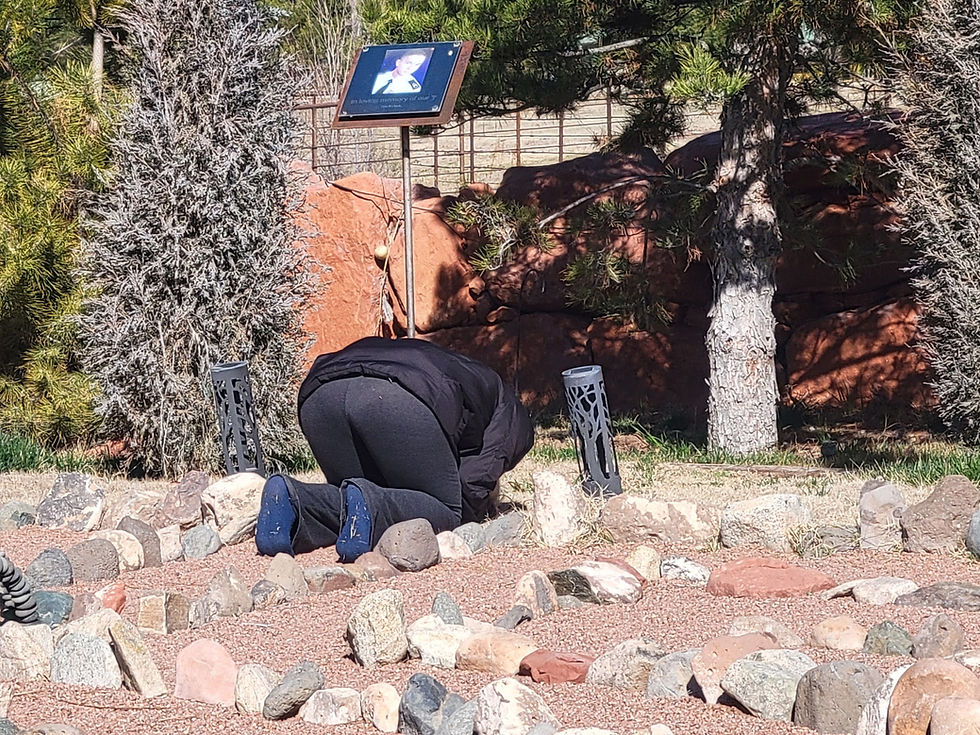
I've often wished this work didn't have to exist but not for the same reason as the one in the article below. Rather, I've wished this because I've wished, with all my heart, that no one died before living their full lifetimes.
For three decades, I've walked with mothers and fathers, brothers and sisters, grandparents, and husbands and wives in the heaviest places of loss. This has been the focus of my scholarly work at Arizona State University for two decades.
In both my work and my research with bereaved individuals, I have witnessed how society insists on fixing grief, flattening it with platitudes, peddling what I call the “happiness cult" of toxic positivity. Society demands that we tidy up sorrow so we can be productive. In that insistence lies one of grief’s great dangers: the temptation to avoid the work of mourning by seeking a shortcut, a simulation, a digital echo of what is gone.
So when I encounter technologies like this, I notice a deep and immediate concern. Not the concern about the ingenuity of the technology but about the psychology and emotional risks to the bereaved in the future. Sure, some of this may be because I'm old. Maybe because I don't fully understand the technology. But for me, simulation to 'eliminate the need to grieve' scares me. This is my main concern, and I've chosen to share after thinking about this for quite awhile. I wonder how you all feel about this?
There is so much talk about the 'dangers' and adverse outcomes for those with intense and enduring grief, even in this article. But I believe that grief itself, as heavy and as overwhelming as it can feel, doesn't destroy people's lives. Loneliness, lack of support, and chronic avoidance destroys people's lives.
The literature is clear: the chronic avoidance of grief-related emotion is destructive. When mourning is suppressed, the distress does not resolve; it transmutes. Emotional avoidance is a well documented risk factor for substance use. This is because alcohol and other numbing behaviors function as short term regulators of intolerable affect, while simultaneously deepening long term dysregulation. In fact, my colleague, @Hakan Cengiz and I just submitted a manuscript about impulsive and compulsive consumerism, noting that it, too, is used as an emotional avoidance tool. This isn't to judge those who turn to avoidance mechanisms to cope. It is much more a condemnation of societies that seek to abbreviate, curtail, control, and dismiss grief. I cannot tell you the number of times bereaved individuals have told me that they called a friend "sobbing" and the friend offered to meet them "at the bar." Don't get me started on the ways that others often treat those who are in acute bereavement. We have a massive problem indeed.
You see, it is my belief that grief is a natural response to the material rupture of an emotional and material attachment (as an aside, I've witness nonhumans grieve as well, so this isn't just a 'human' phenomenon). The cultural and intrapsychic mandate to bypass grief rather than integrate, 'be with' our grief related emotions, I believe, is one of the gravest dangers facing society. In this context, addiction (or avoidance generally) is not a failure of will, nor evidence of “too much grief,” but a predictable outcome of the attempt to numb or deflect painful emotions. Yes, it hurts and yes, it's hard. As someone who has buried my child, I know this.
But when grief is allowed, felt, named, witnessed, and tended to by others and ourselves with compassion, it helps us 'bear the unbearable'. When it is avoided, it persists in rigid, maladaptive forms: numbing, compulsive behavior, sometimes even emotional and mental crisis. The problem, then, isn't grief itself, but the inability to grieve in cultures that often fail to allow space for grief. There is plenty of research to support these ideas.
More than anything, the idea of eradicating the world of human grief terrifies me. The question of, "What would I have lost in learning to grieve my beloved daughter over the past 32 years?" is eclipsed only by the question of "What would my life had been if she had lived." Of course, anything that is meaningful and that derived from her death is not worth the price. But, our love, for me, felt worthy of mourning, even in grief's fullest moments of agony. If someone had offered to take away my grief and replace it with a virtual version of my daughter, it would not have been enough. In fact, for me, it would have been an insult. I see the seduction though.
The danger here is subtle and systemic. A society that already struggles to hold space for sorrow, that stigmatizes grief, minimizing it with "cheer up" tropes, may embrace digital surrogates not because they actually help us but because they help us avoid. What is lost in that avoidance is not only the grief we rightfully feel and that belongs to us and our beloveds who died, but the transformation that grief can bring: the capacity for deeper compassion, the expansion of empathy, the recalibration of what it means to love someone beyond their physical presence-- even the immense and profound shifts that can help us value each moment as more precious (these all take much time). These are not side effects of mourning: they are its sacred work.
Technology that markets itself as “lasting emotional connection” but is built on a simulation is not the same as the ongoing relationships with our dead that we forge through feeling our emotions, connecting with memories, meaning, ritual, and community. The risks outlive the momentary comfort of a culture that expects grief to be solved, rather than lived, honored, and integrated. I do think that if technologically inclined people want to engage AI with bereavement, there may be responsible ways to do so that reduce harm. But striving to eliminate grief is not responsible in my opinion.
I find my true self in the invisible folds of my days, in the throat tightening moments that surprise me even decades after my daughter's death, in the quiet places where I carry forward her name. This is a truth, for me, that is not based on recreating the past, but on reconciling with the truth of absence, love, and longing that are not a simulation and that never die.
I'd be interested to hear your opinions on this technology.
(Here's my summary for those who can't read the article: The writer looks at what artificial intelligence – as it meets up with how people feel sadness and loss – really means for us and presents ‘deadbots’ as quite advanced AI creations that are made to act like conversations with people who have died with the goal of eliminating the need to grieve. AI derives data to construct a false personhood after death by analyzing what people put on social media or personal messages, and these digital copies use these data to develop and copy the personalities of those who died so they can continue to interact with the living. The writer actually agrees with me a little bit, although talking to a digital copy of someone you have lost may at first look like a good way to help with sadness, it could change how we grieve (by trying to eradicate grief altogether). Deadbots might, without meaning to, hold back the normal way people go through grief, and create an attachment to a digital identity. This particular tech was developed by a man who watched his mother's "grief" 'destroy' her life due to substance use and multiple psychiatric hospitalizations after her own mother's death (of course my take is that NOT grieving, or trying NOT to grieve is responsible for this and the data support this). When his own mother died, he created her AI identity so he doesn't have to grieve for her.)


Me gusta cuando un artículo no presenta las interpretaciones como predicciones seguras. Entender qué significan los números dentro de distintas tradiciones puede ser entretenido y también permite conocer mejor el contexto cultural que existe detrás de algunas asociaciones. Esa perspectiva hace que la lectura resulte mucho más interesante.
Such a deeply compassionate and thought-provoking piece! In a fast-paced society that often pushes for quick emotional recovery or toxic positivity, grief is too easily pathologized or treated as inconvenient. Giving people the space and permission to honor their pain without judgment is a vital part of true emotional healing. Whenever I need a fast mental break after reading profound mental health reflections like this or taking a breather from long work hours, I usually pop over to minigame to decompress for a few minutes. Love that it’s completely free and instant to play right in your browser with zero downloads required—just a great quick reset to clear your head!
calorie calculator keeps the process approachable for beginners who have never paid much attention to nutrition before. Its straightforward approach makes checking calorie needs feel quick and manageable.
I appreciate the depth of research and clarity in your writing. This piece provides a fresh and compelling take on the subject. mermade game
I keep coming back to ragdoll archers because the aiming feels simple at first, but getting consistent shots takes some practice. The physics make even small mistakes pretty noticeable.